



TECHNOLOGIES

Hot stamping

Cold stamping

Laser cutting
Patch welding

Projetion welding

Spot welding

Glueing application

Arc (MAG) welding

Uncoated Steel
Tunnel oven
Shot blasting

Oiling
(surface protection)

Fully developed
Trim Line

T-stud welding

E-coat

Machining

Post piercing

In-die clinching

In-die tapping
Hot stamping
Cold stamping
Laser cutting
Patch welding
Projection-welding
Spot welding
Glueing application
Arc (MAG) welding
Uncoated Steel Tunnel oven
Shot blasting
Oiling (surface protection)
Fully developed Trim Line
T-stud welding
E-coat
Machining
Post piercing
In-die clinching
In-die tapping
Hot Stamping
Hot stamping is a metal forming process in which sheet steel is heated to high temperatures (typically around 900 °C), formed in a die, and then rapidly cooled to harden the material. This process enables the production of ultra-high-strength components with complex shapes, widely used in automotive body structures for improved crash performance and weight reduction.
Products manufactured using this technology:
Cold Stamping
Cold stamping is a metal forming process where sheet metal is shaped at room temperature using a press and rigid dies. It is commonly used in automotive manufacturing to produce precise, high-strength components with consistent geometry and minimal material waste.
Products manufactured using this technology:
Laser cutting
Laser cutting is a precise material removal process that uses a focused laser beam to cut material along a programmed path. It offers high accuracy, clean edges, and flexibility for cutting complex geometries, making it ideal for production of hot formed components in automotive.
Products manufactured using this technology:
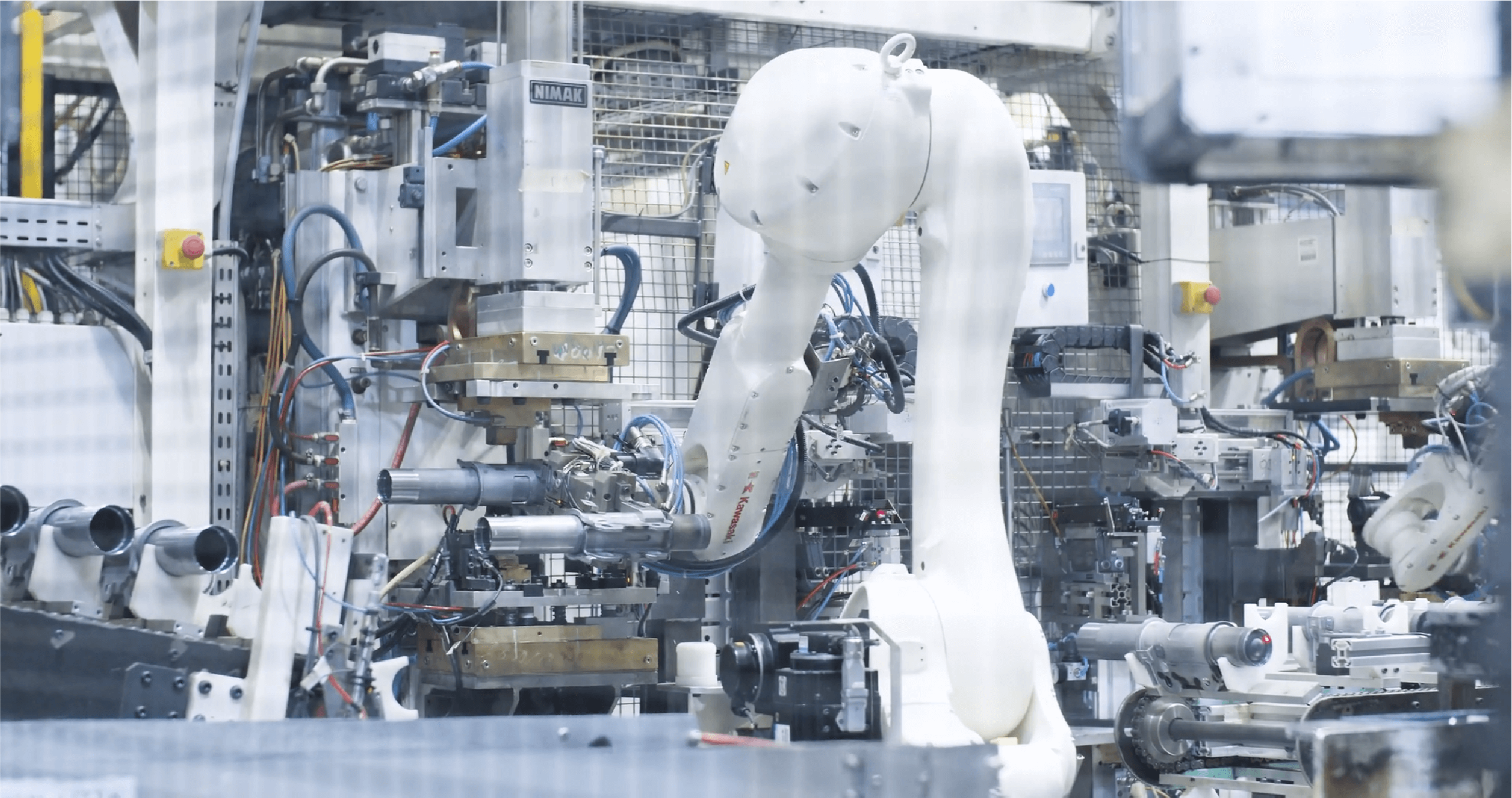
Patch welding
Patch welding is a joining process in which a smaller metal patch or reinforcement is welded onto a base panel before stamping process. This technique is used in body-in-white (BIW) structures to reinforce component strength, stiffness, or crash performance locally, without increasing the thickness of the entire panel.
Products manufactured using this technology:
Projection welding
Projection welding is a resistance welding process in which welds are formed at specific contact points—called projections—embossed into one or both workpieces. Method ideal for joining small metal parts, nuts, or fasteners in automotive and structural applications.
Products manufactured using this technology:
Spot welding
Spot welding is a resistance welding process in which two or more metal sheets are joined by applying pressure and passing electrical current through localized contact points. It’s most common technique used in automotive body-in-white (BIW) production due to its speed, repeatability, and suitability for joining overlapping sheetmetal components.
Products manufactured using this technology:
Glueing application
Glueing application refers to the use of structural adhesives to bond components in vehicle assembly. This method can guarantee sealing, enhances joint strength, improves load distribution, and contributes to NVH (noise, vibration, harshness) performance.
Products manufactured using this technology:
Arc (MAG) welding
Arc (MAG) welding, (Metal Active Gas) is a fusion welding process that uses an electric arc to melt continuously feded wire as an electrode and the base material, with an active shielding gas (such as CO₂ or a CO₂/argon mix) protecting the weld pool. It is widely used in automotive and structural applications for producing strong, durable joints in mild and high-strength steels.
Products manufactured using this technology:
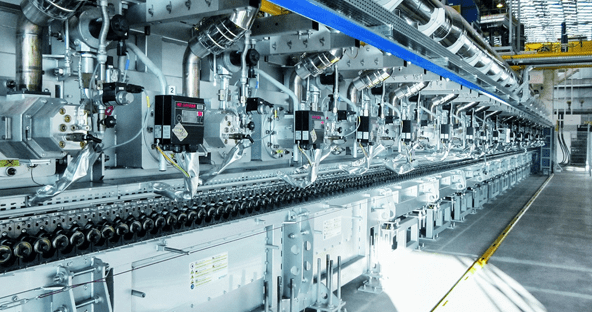
Uncoated Steel Tunnel oven
(Protective atmosphere)
Uncoated steel tunnel oven (protective atmosphere) is a controlled heating system used to process bare (uncoated) steel components in a sealed tunnel environment filled with a protective gas—typically nitrogen or a nitrogen-hydrogen mix—to prevent oxidation during heat treatment before hot stamping process.
Products manufactured using this technology:
Shot blasting
Shot blasting is a surface preparation process in which small metallic or ceramic particles (shots) are ejected at high velocity onto a material's surface to clean, strengthen, or texture it. It is commonly used to remove contaminants from metal parts and to improve surface adhesion before coating, welding, or painting.
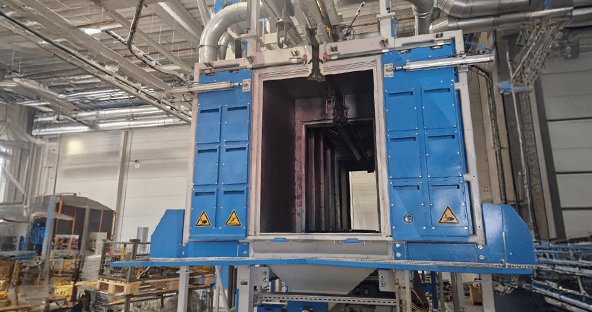
Products manufactured using this technology:
Oiling
(Surface protection)
Oiling (surface protection) is the application of a thin layer of protective oil to uncoated steel components immediately after stamping to prevent corrosion during storage, handling, and transportation. This process is essential in automotive manufacturing to protect surface quality before welding or further processing, and is typically applied using rollers, sprays, or immersion systems.
Products manufactured using this technology:
Fully developed Trim Line
Fully developed trim line refers to a final, net-shape contour of a stamped metal part that is achieved entirely within the stamping die, without the need for secondary trimming operations such as laser cutting. This approach increases production efficiency and reduces cost.
Products manufactured using this technology:
T-stud welding
T-stud welding is a drawn arc welding process used to join a T-shaped stud to a metal surface by applying pressure and electrical current through localized projections on the base of the stud. This method is popular application to create strong, repeatable attachment points for clips, brackets, electrical wires, or interior components without perforating the main panel.
Products manufactured using this technology:
E-coat
E-coat, is an electrochemical painting process where a metal part is immersed in a water-based paint bath and coated through the adhesion of electrically charged paint particles to the part's surface. Widely used in automotive manufacturing. E-coat provides reliable corrosion protection, excellent coverage in cavities, and a durable base layer for further painting.
Products manufactured using this technology:
Machining
Machining is a material removal process in which cutting tools are used to shape metal or other materials into precise geometries by removing excess material. Machining operations are used for achieving tight tolerances and high surface quality in mechanical components.
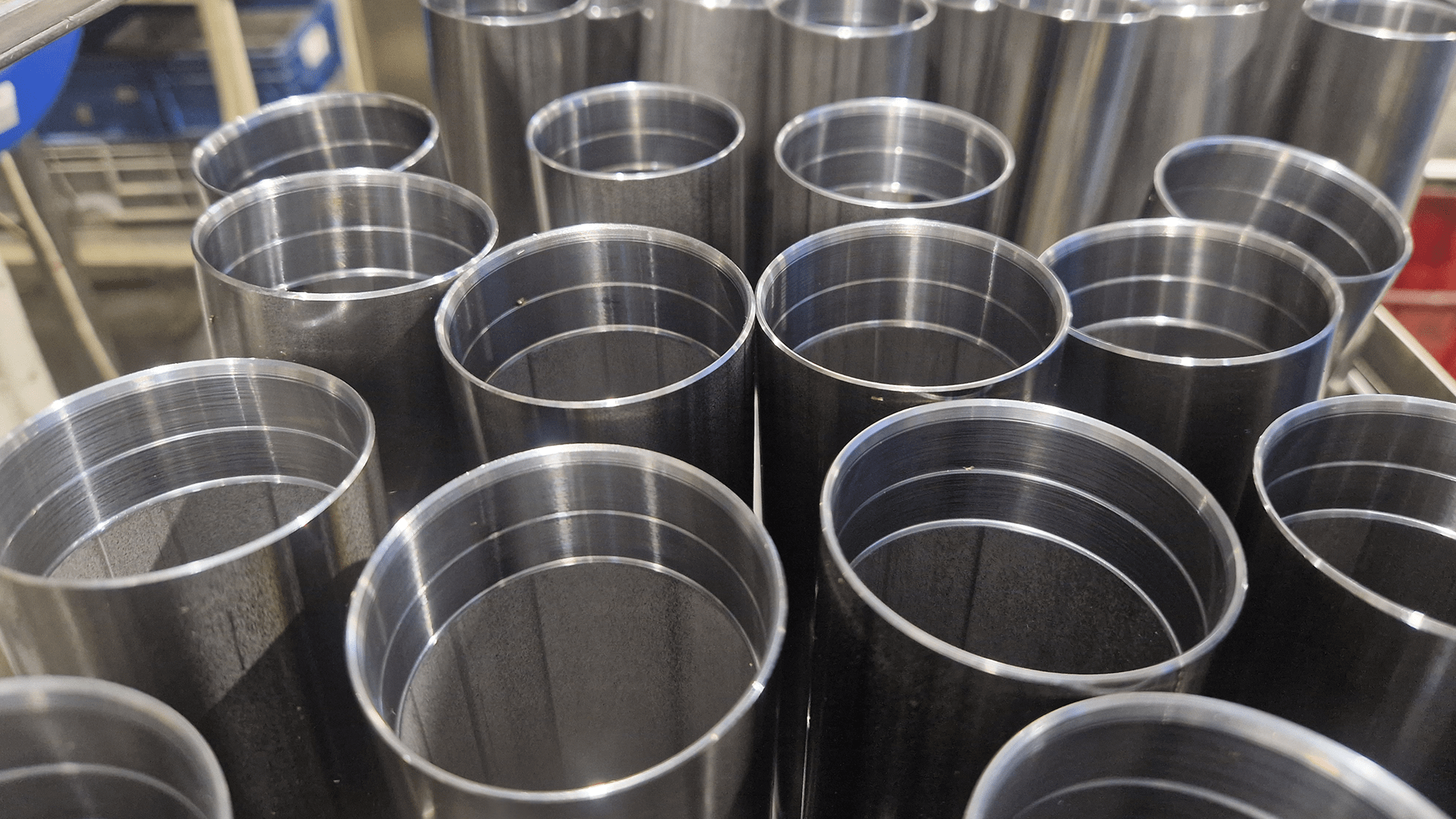
Products manufactured using this technology:
Post piercing
Post-piercing is a metalworking process in which holes or slots are punched into a part after it has undergone forming, welding, or assembly. This technique ensures precise alignment of features relative to the final geometry, and creates openings for locators, fasteners or sensors.
Products manufactured using this technology:
In-die clinching
In-die clinching is a mechanical joining process performed directly in the stamping die, where various types of fasteners can be implemented into the formed part, assuring strength, efficiency and elimination of additional assembly processes.
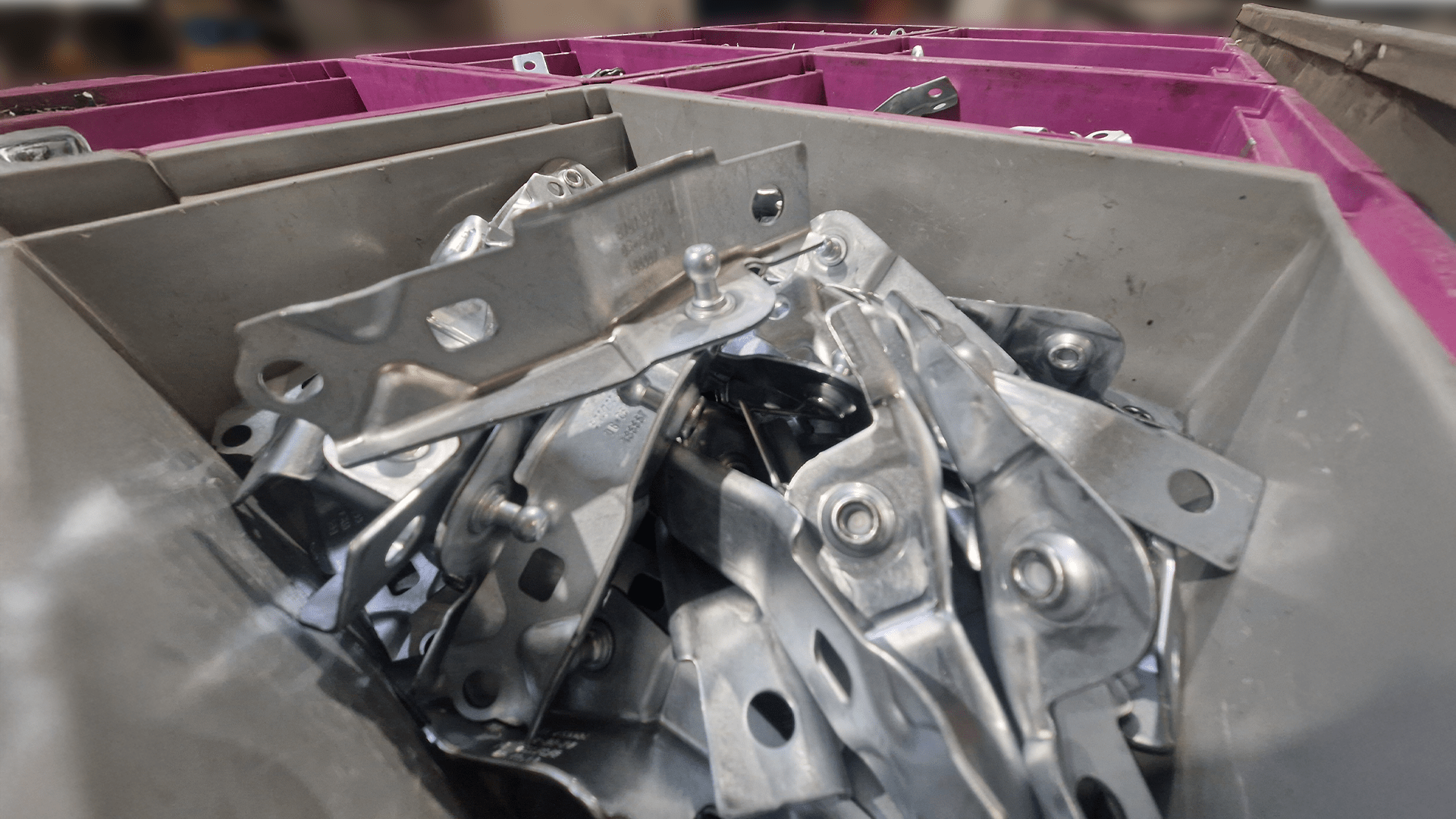
Products manufactured using this technology:
In-die tapping
In-die tapping is a process where threads are formed or cut into pre-pierced holes directly within the stamping die during the press stroke. This integration eliminates secondary operations and improves part accuracy.
Products manufactured using this technology: